
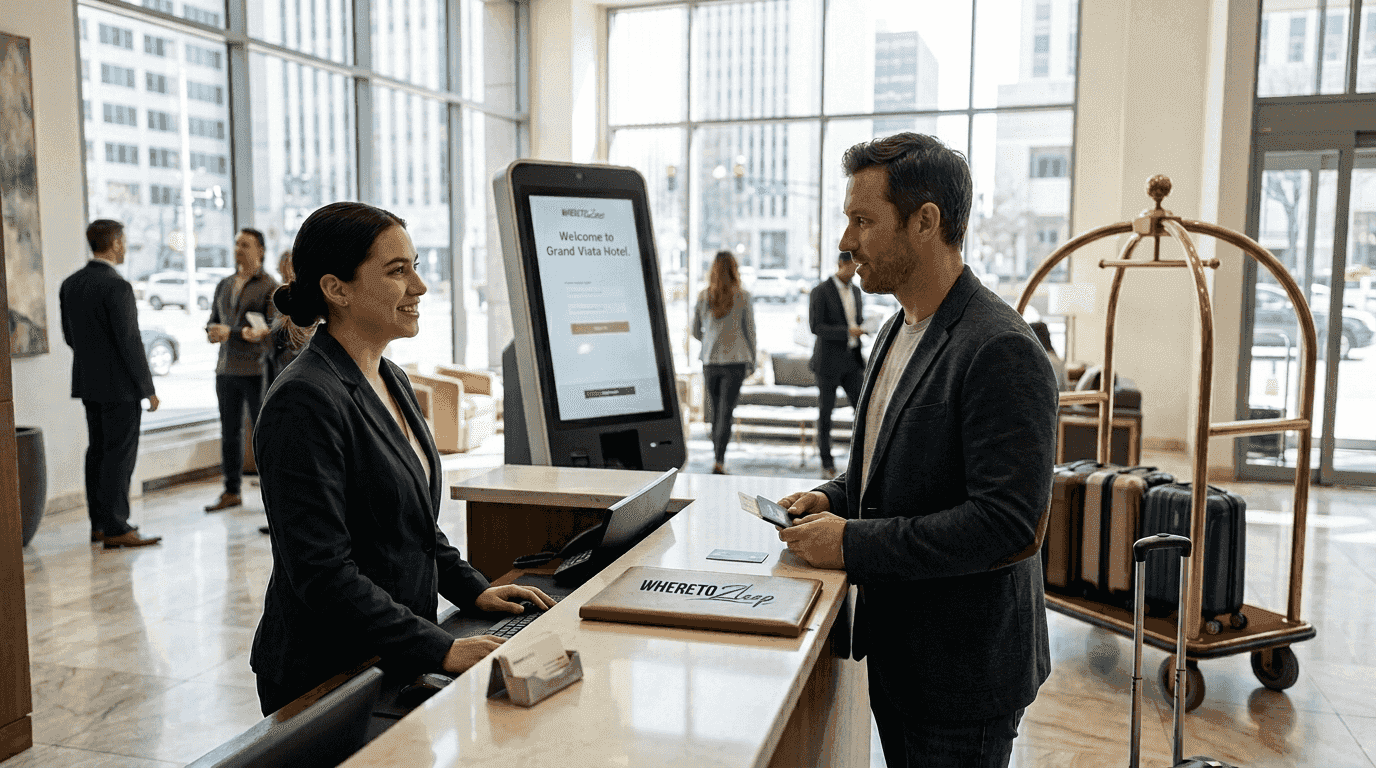
Hotels are transforming rapidly through technology investments, with 94% of hospitality IT leaders increasing tech budgets this year. This surge reflects a fundamental shift in how hotels balance guest satisfaction with operational efficiency. While artificial intelligence and IoT devices promise personalized experiences and cost savings, the challenge lies in maintaining authentic human connections that define hospitality. This guide explores how hotels leverage technology to enhance stays while addressing concerns about over-automation, backed by real-world data and case studies from properties achieving measurable results.
Table of Contents
- The Evolving Landscape: How Hotels Are Investing In Technology
- Technology's Impact On Guest Experience And Hotel Operations
- Balancing Innovation With The Human Touch In Hospitality
- Practical Applications: How Hotels Use Technology To Enhance Customer Experience In 2026
- Explore Hotels That Embrace Technology With Wheretozleep
- FAQ
Key takeaways
| Point | Details |
|---|---|
| Investment surge | Nearly all hospitality IT leaders are increasing technology budgets in 2026, with AI leading adoption rates |
| Operational efficiency | Modern property management systems save over 500 labor hours annually while boosting revenue by 91% |
| Guest personalization | AI-driven profiling and IoT devices enable real-time room customization, improving satisfaction scores significantly |
| Balance required | Successful hotels combine technological efficiency with human hospitality to avoid dehumanizing guest experiences |
The evolving landscape: how hotels are investing in technology
The hospitality industry is experiencing unprecedented technology adoption. 94% of hospitality IT decision-makers plan tech investments, with AI used for upsells by 49% and personalization by 46%. This represents a 16% increase from previous years, signaling a fundamental transformation in hotel operations. The shift reflects changing guest expectations and competitive pressures pushing properties toward automation.
Three technology categories dominate current investments. Artificial intelligence leads the pack, particularly for revenue optimization through dynamic pricing and automated upselling. Internet of Things devices follow closely, enabling smart room controls and energy management. Property management systems round out the top three, serving as the central nervous system connecting all hotel operations.
Hotels are prioritizing technologies that deliver immediate ROI. AI chatbots reduce staffing needs during peak hours. IoT sensors optimize energy consumption without guest intervention. Cloud-based PMS platforms enable remote management and real-time analytics. These investments reflect a calculated approach where technology must prove its value quickly.
The rapid adoption pace reveals shifting industry priorities. Hotels now view technology as essential infrastructure rather than optional upgrades. Data-driven decision making replaces intuition-based management. Automation handles repetitive tasks, freeing staff for high-value guest interactions. This evolution positions technology as an enabler of better hospitality rather than a replacement for it.
Key technology categories hotels are adopting in 2026:
- Artificial intelligence for dynamic pricing, chatbots, and personalized recommendations
- Internet of Things devices for smart rooms, energy management, and predictive maintenance
- Cloud-based property management systems integrating all hotel operations
- Mobile apps enabling contactless check-in, digital keys, and in-room service requests
- Revenue management systems using machine learning to optimize pricing strategies
Technology's impact on guest experience and hotel operations
Artificial intelligence transforms front desk operations dramatically. AI chatbots handle 70% of guest queries, reducing check-in times from 3.3 to 2.7 minutes while increasing satisfaction scores from 4.6 to 4.8 out of 5. This efficiency gain allows human staff to focus on complex requests requiring empathy and problem-solving. Guests appreciate faster service for routine questions while still accessing personal assistance when needed.

Property management systems deliver substantial operational benefits. Modern PMS save 500+ labor hours annually, achieving 88% cost savings and 91% revenue growth. These platforms automate reservation management, housekeeping coordination, and billing processes that previously required manual intervention. Integration with channel managers and booking engines eliminates double entry and reduces errors.
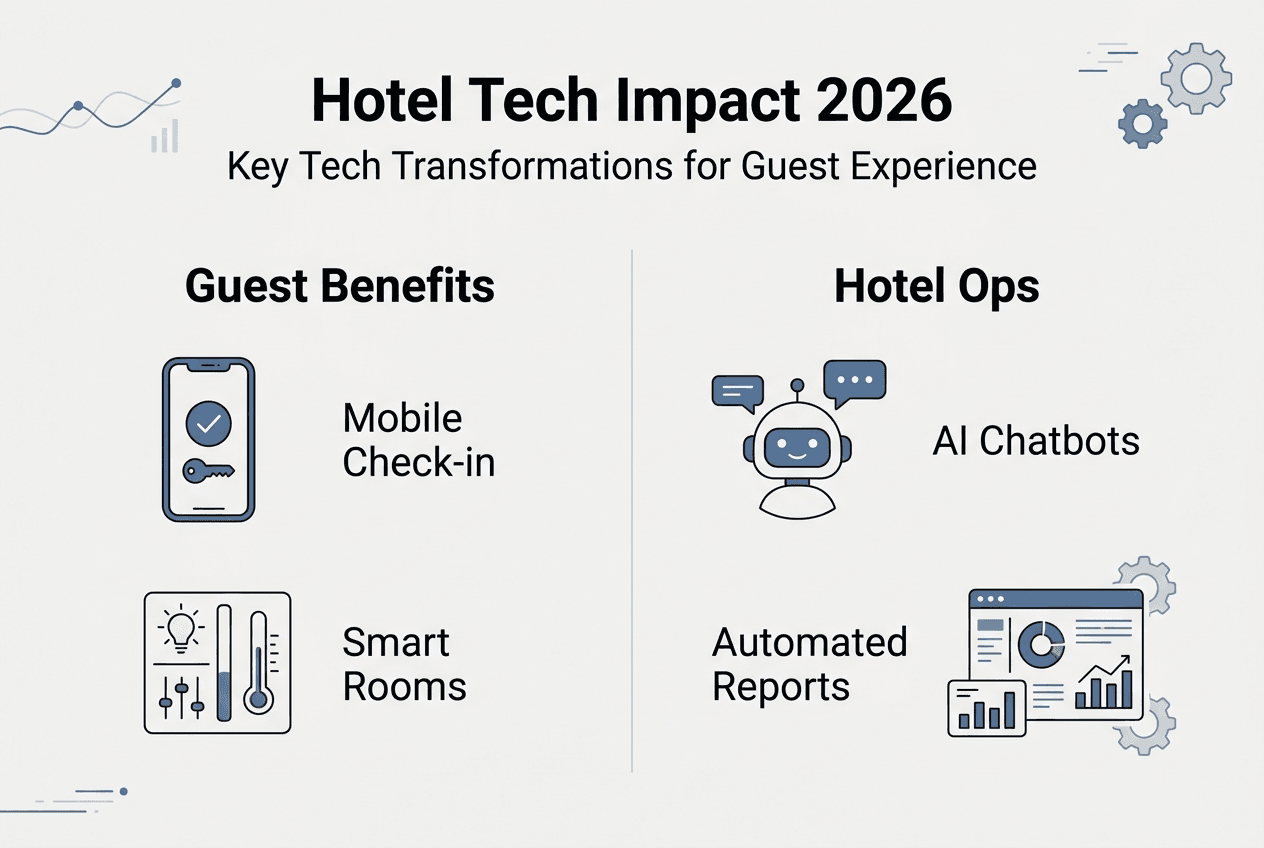
IoT devices create personalized room environments automatically. Smart thermostats learn guest preferences and adjust temperature before arrival. Lighting systems adapt to time of day and occupancy patterns. Voice-activated controls let guests customize settings without navigating complex panels. These subtle enhancements improve comfort without requiring guest effort or technical knowledge.
Pro Tip: Integrate AI chatbots and property management systems with your hotel's API ecosystem to enable seamless data flow between guest-facing applications and back-office operations, ensuring consistent service delivery across all touchpoints.
| Technology | Labor Savings | Guest Satisfaction Impact | Implementation Time |
|---|---|---|---|
| AI Chatbots | 70% query reduction | +4.3% satisfaction increase | 2-3 months |
| Modern PMS | 500+ hours annually | Indirect via faster service | 3-6 months |
| IoT Smart Rooms | 30% energy cost reduction | +8% comfort ratings | 4-8 months |
The data reveals technology's dual benefit. Operational efficiency improves through automation and streamlined workflows. Guest satisfaction rises through faster service and personalized experiences. Hotels achieving both outcomes treat technology as a tool enhancing human capabilities rather than replacing them. The most successful implementations maintain staff visibility while reducing mundane tasks.
Technologies delivering measurable guest experience improvements:
- Mobile check-in reducing lobby wait times by 60% during peak periods
- Digital concierge services providing instant local recommendations based on guest profiles
- Smart room controls enabling temperature and lighting adjustments via voice or app
- Predictive maintenance preventing equipment failures before they impact guest comfort
Balancing innovation with the human touch in hospitality
Technology adoption carries significant risks when implemented without consideration for human elements. Over-reliance on technology risks dehumanizing guest experiences, with project failure rates between 60-85%. Tech failures cause frustration and safety issues, particularly when digital keys malfunction or automated systems provide incorrect information. Guests facing locked doors at midnight due to app glitches experience anxiety that damages brand perception.
Demographic factors influence technology acceptance rates. Older guests often prefer speaking with front desk staff rather than navigating mobile apps. Business travelers may value efficiency over personalization. Leisure guests might seek human recommendations for local experiences despite AI suggestions. Hotels must recognize these preferences and offer multiple service pathways.
The hospitality industry's essence lies in genuine human connection. A warm greeting from staff creates emotional bonds that algorithms cannot replicate. Empathetic problem-solving during service failures builds loyalty more effectively than automated apologies. Personal recognition of repeat guests demonstrates care that technology can support but not replace.
Pro Tip: Train staff to handle technology issues empathetically by acknowledging guest frustration immediately, offering manual alternatives, and following up personally after tech-related problems to maintain relationship quality.
Experts recommend a hybrid approach combining technological efficiency with authentic hospitality. Use AI to handle routine transactions, freeing staff for meaningful interactions. Implement IoT for convenience while ensuring manual overrides exist. Deploy chatbots for common questions but route complex issues to humans quickly. This balanced model leverages technology's strengths while preserving hospitality's human core.
Risks hotels face with excessive technology reliance:
- System outages leaving guests unable to access rooms or services
- Impersonal interactions reducing emotional connection with the property
- Technical barriers frustrating less tech-savvy guests
- Data breaches compromising guest privacy and trust
- Staff skill atrophy as automation handles tasks previously requiring human judgment
Practical applications: how hotels use technology to enhance customer experience in 2026
Real-world implementations demonstrate technology's tangible impact. The Refinery Hotel increased occupancy to 90%, direct bookings to 40%, and earned $500 premiums per room type using AI-driven pricing and upselling. Their system analyzes demand patterns, competitor rates, and guest behavior to optimize pricing dynamically. Automated upselling presents relevant room upgrades at optimal moments during the booking process.
Guest profiling technology generates impressive revenue gains. NexGen Guest generated $7,000+ upsell revenue in six weeks at Condado Vanderbilt using AI-based guest profiling. The system analyzes booking data, past stays, and preferences to suggest personalized upgrades and amenities. Targeted offers convert at higher rates than generic promotions because they match actual guest needs.
| Hotel | Primary Technology | Occupancy Impact | Revenue Increase | Implementation Period |
|---|---|---|---|---|
| Refinery Hotel | AI dynamic pricing | Reached 90% | $500 room premiums | 6 months |
| Condado Vanderbilt | AI guest profiling | Not disclosed | $7,000+ upsells in 6 weeks | 3 months |
Successful technology deployment follows a structured approach. Hotels achieving positive outcomes share common implementation patterns that minimize disruption while maximizing adoption.
Steps hotels take to successfully deploy new technology solutions:
- Conduct thorough needs assessment identifying specific pain points technology should address
- Select vendors with proven hospitality experience and robust integration capabilities
- Pilot test systems in limited areas before full property rollout
- Train staff extensively on both technical operation and guest communication about new features
- Gather guest feedback continuously and iterate based on real-world usage patterns
- Maintain manual backup processes for critical functions during transition periods
- Measure ROI through specific metrics like labor hours saved and satisfaction scores
These implementations succeed because they solve real problems rather than adopting technology for its own sake. The Refinery Hotel addressed revenue optimization challenges. Condado Vanderbilt focused on personalization at scale. Both properties maintained service quality while achieving efficiency gains. Their results demonstrate that technology enhances rather than replaces hospitality when implemented thoughtfully.
Explore hotels that embrace technology with WhereToZleep
Finding hotels that balance modern amenities with genuine hospitality becomes effortless with the right platform. Tech-savvy travelers seeking properties with smart room features, mobile check-in, and personalized services can discover ideal stays through streamlined search tools.
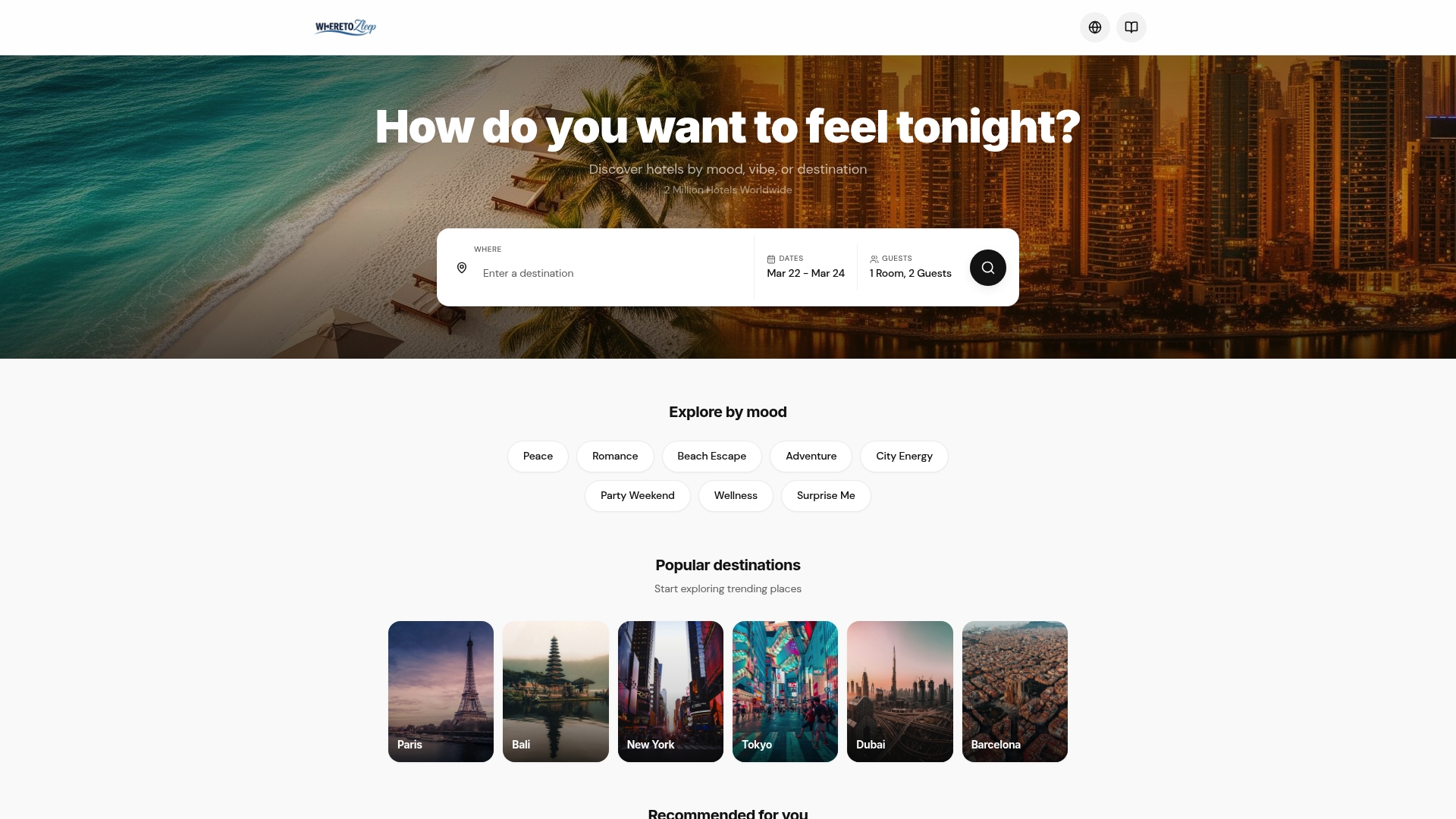
WhereToZleep helps you compare hotels worldwide, highlighting properties investing in guest experience technology. Filter by amenities like smart room controls, mobile keys, and AI concierge services. The platform's intuitive interface lets you evaluate options quickly, reading verified reviews mentioning technology implementations. Once you book, manage your reservation through a centralized dashboard designed for travelers who value efficiency. Discover your next tech-forward hotel stay where innovation enhances comfort without sacrificing the personal touch that makes hospitality memorable.
FAQ
What is the role of AI in enhancing hotel guest experiences?
AI analyzes guest data to personalize interactions and automate routine services, significantly increasing satisfaction and revenue. Hotels deploy AI for dynamic pricing, chatbot support, and tailored recommendations based on booking history and preferences. The technology handles 70% of common guest queries, freeing staff to focus on complex requests requiring human judgment. AI-driven upselling presents relevant room upgrades at optimal moments, converting at higher rates than generic promotions.
How does IoT improve sustainability in hotels?
IoT adoption positively impacts sustainable performance via data-driven decision making, based on research with hotel managers. IoT sensors collect real-time environment data to optimize energy and resource use, reducing waste without compromising guest comfort. Smart thermostats adjust heating and cooling based on occupancy patterns. Lighting systems dim automatically in unoccupied areas. Water management sensors detect leaks and monitor consumption. These data-driven insights enable hotels to reduce their environmental footprint while lowering operational costs.
Are there risks to relying heavily on hotel technology?
Technology failures can frustrate guests and create safety concerns, particularly when digital keys malfunction or automated systems provide incorrect information. Project failure rates in hospitality technology range between 60-85%, often due to poor integration or insufficient staff training. Over-reliance may diminish the valuable human connection that defines exceptional hospitality. Guests facing technical issues during critical moments like late-night check-in experience anxiety that damages brand perception. Successful hotels maintain manual backup processes and train staff to handle tech problems empathetically.
How do property management systems increase hotel profitability?
Modern PMS platforms save over 500 labor hours annually by automating reservation management, housekeeping coordination, and billing processes. These systems integrate with channel managers and booking engines, eliminating manual data entry and reducing errors. Real-time analytics enable managers to identify revenue opportunities and optimize staffing levels. Cloud-based PMS solutions provide remote access, allowing management to monitor operations from anywhere. Hotels implementing comprehensive PMS report 88% cost savings and 91% revenue growth through improved efficiency and better decision-making capabilities.
What should guests expect from tech-forward hotels in 2026?
Guests can expect seamless mobile experiences including contactless check-in, digital room keys, and in-app service requests. Smart rooms automatically adjust temperature, lighting, and entertainment based on preferences learned from previous stays. AI concierges provide instant local recommendations and handle routine questions 24/7. However, the best tech-forward hotels maintain visible staff presence for personal interactions and complex problem-solving. Technology should enhance convenience without creating barriers for less tech-savvy guests who prefer traditional service options.