

Booking a hotel shouldn't feel like solving a puzzle, yet many travelers overpay or settle for disappointing stays because they skip essential planning steps. The good news? A few smart strategies can transform your hotel booking experience, helping you secure better deals and accommodations that match your travel style. This guide walks you through practical planning methods, from budgeting and choosing your ideal hotel vibe to using price comparison tools that reveal the best rates across booking platforms. You'll learn how to navigate dynamic pricing, avoid common booking mistakes, and adapt to modern booking trends that younger travelers have already mastered.
Table of Contents
- Understanding The Hotel Booking Problem: Budgeting And Vibe Selection
- Using Price Comparison Tools And Extensions To Find The Best Hotel Deals
- Navigating Dynamic Pricing And Booking Tips To Secure The Best Stay
- Adapting Hotel Booking For Gen Z And Mobile-First Travelers
- Plan Your Perfect Hotel Stay With Wheretozleep
- How To Plan Hotel Stays FAQ
Key takeaways
| Point | Details |
|---|---|
| Budget and vibe first | Start with flight costs and decide your hotel style before searching to simplify choices |
| Use comparison tools | Browser extensions like Hotel Ninja show final prices across sites instantly, including all fees |
| Clear cookies matters | Delete browsing data before searching to avoid inflated prices from dynamic pricing algorithms |
| Price isn't everything | Evaluate cancellation policies, guest reviews, and included amenities alongside rates |
| Mobile booking dominates | Over 75% of younger travelers book via phones, prioritizing peer reviews and authentic experiences |
Understanding the hotel booking problem: budgeting and vibe selection
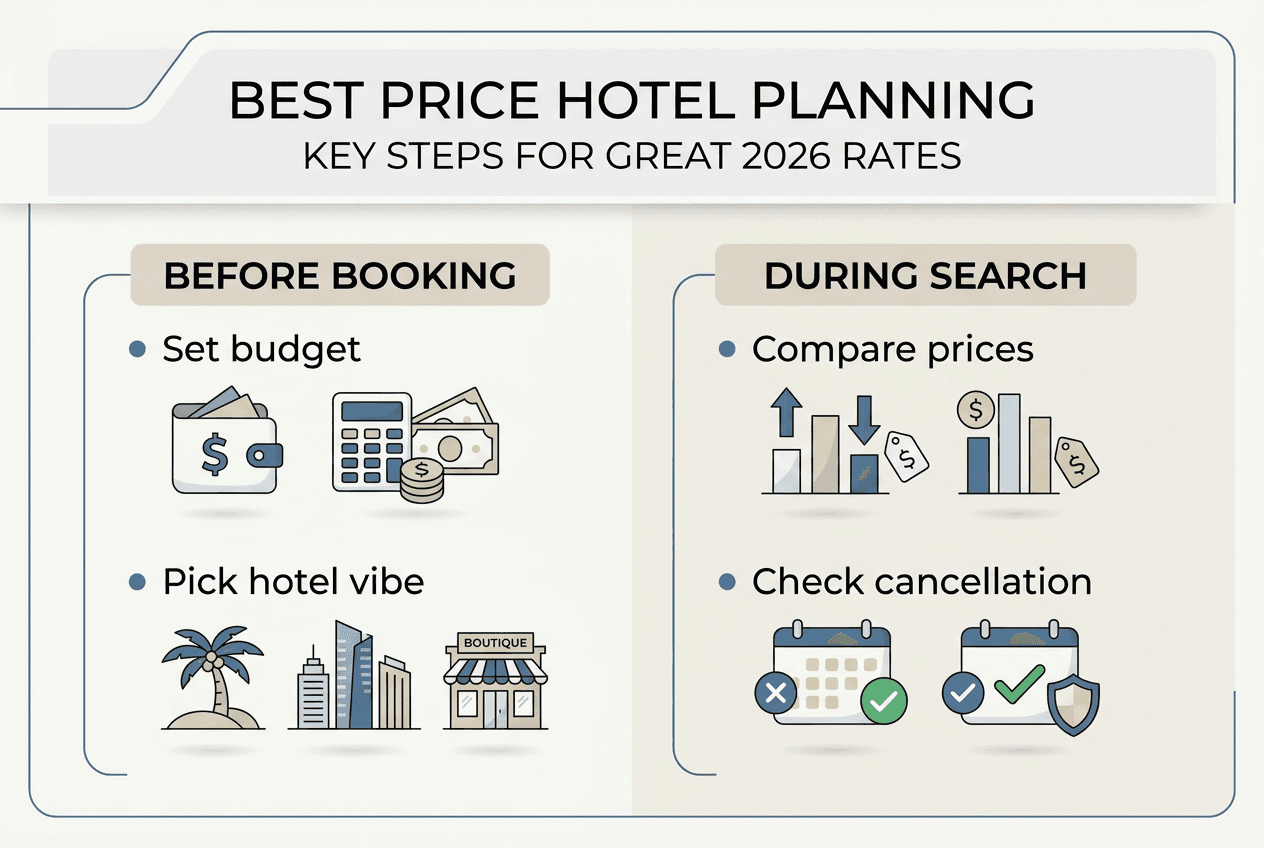
Effective hotel planning starts before you ever open a booking site. Your first step is understanding your overall trip budget, and the biggest variable is usually flights. Check airfare costs using Google Flights or Skyscanner before committing to hotel budgets. Once you know flight expenses, you can allocate remaining funds realistically for accommodations, meals, and activities.
Next comes choosing your hotel vibe, a step that saves hours of scrolling through irrelevant properties. Deciding whether you want boutique charm, luxury amenities, budget-friendly basics, or family-oriented facilities narrows your search dramatically. This approach prevents decision paralysis when faced with thousands of options in popular destinations. List your top three priorities, whether that's rooftop pools, walking distance to attractions, or quiet neighborhoods away from tourist crowds.
Pro Tip: Define your ideal hotel vibe before selecting a specific neighborhood or location. This filtering method helps you focus on properties you'll genuinely enjoy rather than getting overwhelmed by every available option in a city.
Consider travel season and destination when setting expectations. Peak summer months in European cities or winter ski resorts command premium rates, while shoulder seasons offer better value without sacrificing weather quality. Research typical price ranges for your chosen destination during your travel dates to calibrate your budget appropriately. This preparation prevents sticker shock and helps you recognize genuine deals when comparison shopping.
Your vibe preferences should align with your travel purpose. Business travelers might prioritize reliable WiFi and workspace areas, while couples seek romantic settings with privacy. Families need multiple beds, kitchenettes, and proximity to kid-friendly attractions. Adventure travelers often prefer basic, clean accommodations that free up budget for experiences. Clarifying these needs upfront streamlines every subsequent booking decision.
Using price comparison tools and extensions to find the best hotel deals
Most travelers stick with familiar booking platforms like Booking.com or Expedia, potentially missing better rates available elsewhere. Price comparison tools solve this problem by aggregating real-time pricing data from multiple booking sites simultaneously. These platforms use web scraping or API integrations to gather current rates, taxes, and fees from dozens of sources.
Hotel Ninja compares hotel prices across multiple booking websites including Booking.com, Expedia, Hotels.com, and Agoda through a browser extension. The key advantage is seeing final prices including taxes and fees rather than teaser rates that balloon at checkout. This transparency prevents unpleasant surprises when you're ready to confirm your reservation.
The Chrome extension compares prices directly on booking sites, eliminating the need to open multiple tabs and manually track rates. You browse normally on your preferred booking platform, and the extension displays competing prices in a sidebar or overlay. This side-by-side comparison reveals which site offers the best total cost for identical rooms and dates.
Pro Tip: Clear your browser cookies and cache before starting hotel price searches. Dynamic pricing algorithms track your browsing history and may inflate prices if they detect repeated searches for the same property.
Price comparison effectiveness depends on tool features and coverage. Evaluate tools based on these criteria:
| Tool Feature | Hotel Ninja | Manual Comparison | Meta-search Sites | | --- | --- | --- | | Shows final prices with fees | Yes | Requires clicking through | Sometimes | | Browser integration | Chrome extension | None | Separate website | | Real-time updates | Automatic | Manual refresh needed | Varies | | Booking site coverage | 10+ major platforms | Unlimited but tedious | 15-20 platforms | | User effort required | Minimal | High | Moderate |
While price comparison tools provide valuable data, they work best when combined with your own research. Cross-reference rates with hotel direct booking sites, which occasionally offer exclusive deals or loyalty program benefits not available through third parties. Some properties provide price matching guarantees if you find lower rates elsewhere. You can manage booking options more effectively when you understand the full pricing landscape across platforms.
Navigating dynamic pricing and booking tips to secure the best stay
Hotel prices aren't static numbers. Rates fluctuate multiple times daily due to demand, seasonality, and browsing history, with variations reaching 20% or more during peak travel periods. Understanding these pricing mechanisms helps you time bookings strategically and avoid overpaying.

Dynamic pricing algorithms adjust rates based on real-time factors including current booking velocity, competitor pricing, local events, and historical demand patterns. Hotels raise prices as rooms fill up or when major conferences and festivals drive demand spikes. Conversely, rates drop when occupancy predictions fall short or competitors undercut pricing. Your personal browsing behavior also influences prices, as booking platforms track repeat visits and may increase rates to create urgency.
Clearing browser data minimizes price inflation from tracking cookies. Use private browsing mode or delete cookies between searches to present yourself as a new visitor rather than a motivated buyer. This simple step can reveal lower introductory rates that booking sites reserve for first-time searchers.
Assuming the lowest price guarantees the best deal is a misconception. Evaluate cancellation policies carefully, as non-refundable rates save money upfront but eliminate flexibility if plans change. Free cancellation options cost slightly more but provide valuable insurance against unexpected schedule shifts, illness, or better deals emerging closer to travel dates. Guest reviews matter equally, revealing issues like cleanliness problems, noise complaints, or misleading photos that budget rates can't justify.
Pro Tip: Book cancellable rooms when prices seem high or your travel dates aren't finalized. Monitor rates regularly and rebook if prices drop, canceling your original reservation penalty-free.
Peer reviews on Reddit, TripAdvisor, and Google Reviews offer authentic insights beyond polished marketing photos. Look for recent reviews mentioning specific details like mattress comfort, water pressure, staff responsiveness, and neighborhood safety. Patterns across multiple reviews carry more weight than individual complaints or praise.
"Price comparison tools are invaluable, but users must verify final prices including fees and taxes before assuming they've found the best deal. Hidden resort fees or parking charges can erase apparent savings."
Beyond price and reviews, examine what's included in your rate. Some properties bundle breakfast, WiFi, parking, or airport transfers that competitors charge separately. Calculate total trip costs including these extras rather than comparing nightly rates in isolation. A slightly higher base rate with included amenities often delivers better overall value. You can manage booking details more effectively when you understand exactly what you're paying for upfront.
Adapting hotel booking for Gen Z and mobile-first travelers
Younger travelers approach hotel booking differently than previous generations, prioritizing authenticity and digital convenience over traditional luxury markers. Gen Z travelers favor boutique or locally-owned hotels rather than international chain properties, seeking genuine cultural experiences that feel connected to their destination. This preference shapes where they search for accommodations and which properties capture their attention.
Mobile-first behavior dominates this demographic, with over 75% using phones to make purchases. Hotels with clunky mobile sites or apps lose bookings to competitors offering seamless smartphone experiences. Younger travelers expect to research, compare, book, and manage reservations entirely from their phones without switching to desktop computers.
Social media heavily influences destination and accommodation choices. TikTok, Instagram, and YouTube serve as primary sources for travel inspiration, with viral hotel reviews and destination guides driving booking decisions more effectively than traditional advertising. A single popular TikTok video showcasing a unique hotel feature can generate thousands of bookings within days.
Peer recommendations trump professional marketing for this audience. Gen Z travelers trust fellow travelers' experiences shared on social platforms, Reddit threads, and review sites over brand messaging. They seek authentic opinions about whether hotels deliver on promises, prioritizing transparency over polish.
If you're booking as a younger traveler or want to adopt these effective strategies, consider these approaches:
- Search TikTok and Instagram hashtags for your destination to discover hotels featured in popular travel content
- Download booking apps with strong mobile interfaces rather than using desktop sites
- Read recent peer reviews on Reddit, Google, and TripAdvisor before trusting hotel descriptions
- Prioritize properties offering flexible cancellation policies that accommodate spontaneous plan changes
- Look for locally-owned boutique hotels with distinctive character over generic chain properties
- Verify hotels offer reliable WiFi and mobile-friendly check-in processes
- Consider neighborhoods popular with locals rather than tourist-heavy areas for authentic experiences
This mobile-first, peer-driven approach works regardless of age. The emphasis on authentic experiences, transparent pricing, and digital convenience benefits all travelers who value efficiency and genuine quality over brand recognition. Younger travelers simply pioneered these methods that now represent booking best practices for everyone.
Plan your perfect hotel stay with WhereToZleep
Ready to put these planning strategies into action? WhereToZleep simplifies hotel booking by offering transparent pricing and easy comparison across beautiful properties worldwide. The platform helps you apply the budgeting and vibe selection methods covered in this guide, letting you filter hotels by style, location, and amenities that match your travel preferences.
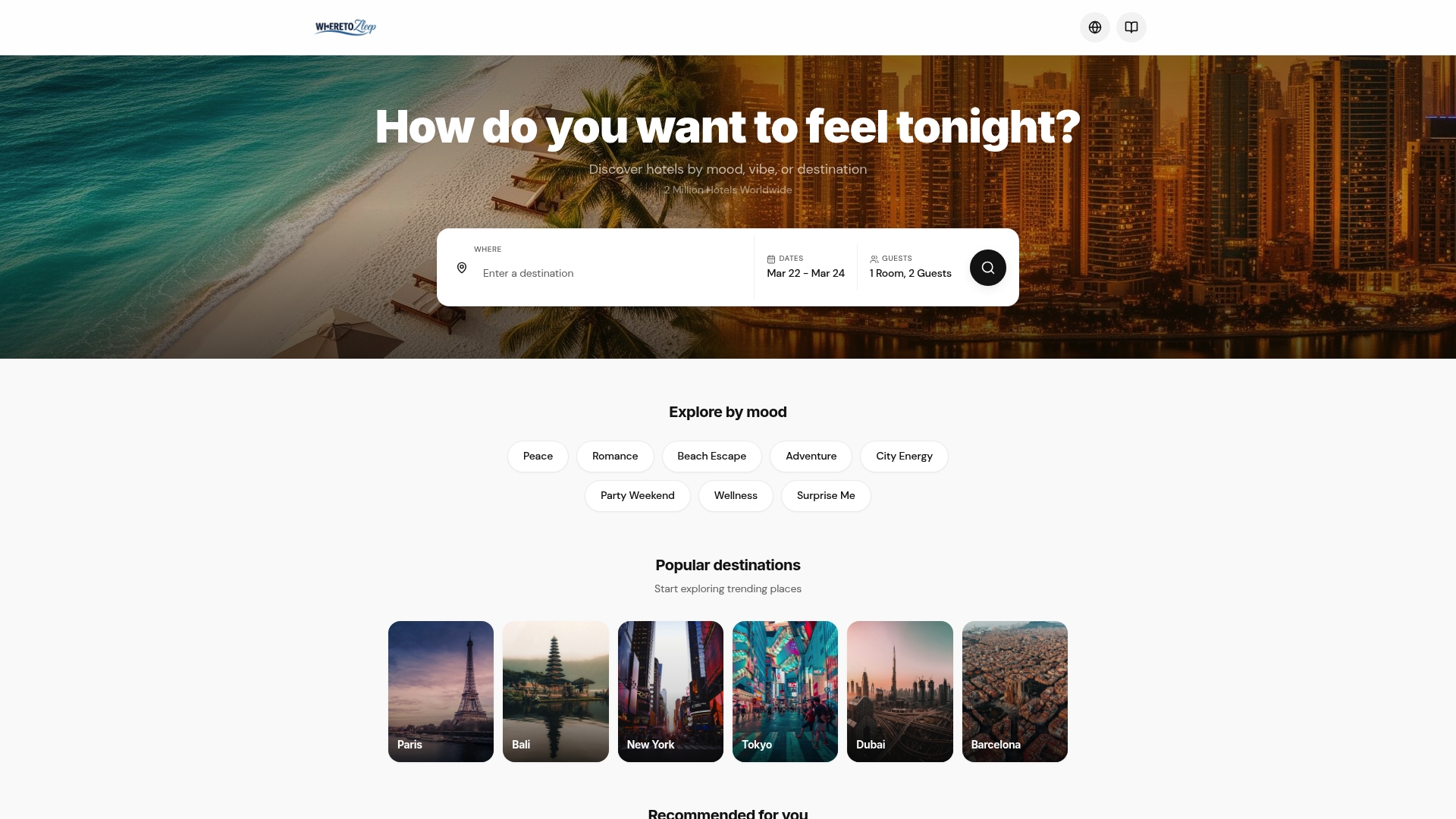
Manage your reservations effortlessly through intuitive booking tools that keep all trip details organized in one place. Whether you're searching for hotels in Paris with classic French charm or hotels in Bangkok offering modern amenities near cultural attractions, WhereToZleep curates selections that deliver genuine value. The platform's mobile-friendly design works seamlessly whether you're planning months ahead or booking last-minute from your phone. Manage your booking with confidence, knowing you've found quality accommodations at competitive rates through smart comparison and planning.
How to plan hotel stays FAQ
What is the best way to compare hotel prices effectively?
Use price comparison tools that show final prices including taxes and fees across multiple booking platforms simultaneously. Clear your browser cache and cookies before searching to minimize price inflation from dynamic pricing algorithms. Review at least three different booking sites directly and check the hotel's own website for exclusive direct booking rates. Always verify cancellation policies alongside prices, as slightly higher refundable rates often provide better value than locked-in non-refundable discounts.
How often do hotel prices change and why?
Hotel prices can change multiple times daily based on demand fluctuations, seasonal patterns, local events, and competitor pricing adjustments. Booking platforms use dynamic pricing algorithms that track booking velocity and adjust rates in real time to maximize revenue. Your browsing history also influences prices, as sites may increase rates for properties you've viewed repeatedly to create urgency. Plan bookings during lower-demand periods and clear browser data between searches to access the best available rates.
Are browser extensions safe for comparing hotel prices?
Popular extensions like Hotel Ninja operate locally in your browser but require permissions to access booking site data and display comparison information. Review privacy policies carefully before installing any extension to understand what data they collect and how they use it. Download only from official browser stores and choose extensions with strong user reviews and transparent developer information. Reputable comparison extensions don't store payment information and simply facilitate price visibility across platforms.
What should I consider besides price when booking a hotel?
Cancellation policies, included amenities, and guest reviews matter as much as nightly rates when evaluating true value. Free cancellation options provide flexibility worth paying slightly more to secure, especially for trips planned months in advance. Check whether WiFi, breakfast, parking, or resort fees are included or charged separately, as these extras significantly impact total costs. Read recent reviews for honest assessments of cleanliness, noise levels, staff quality, and whether photos accurately represent the property.
How can I find hotels popular with younger travelers?
Gen Z travelers prefer boutique and locally-owned properties discovered through social media platforms like TikTok, Instagram, and YouTube rather than traditional booking sites. Search destination-specific hashtags on these platforms to find hotels featured in popular travel content and peer recommendations. Read reviews on Reddit and Google from fellow travelers rather than relying solely on professional marketing. Look for properties emphasizing authentic local experiences, sustainable practices, and mobile-friendly booking processes that align with younger travelers' values and digital habits.