
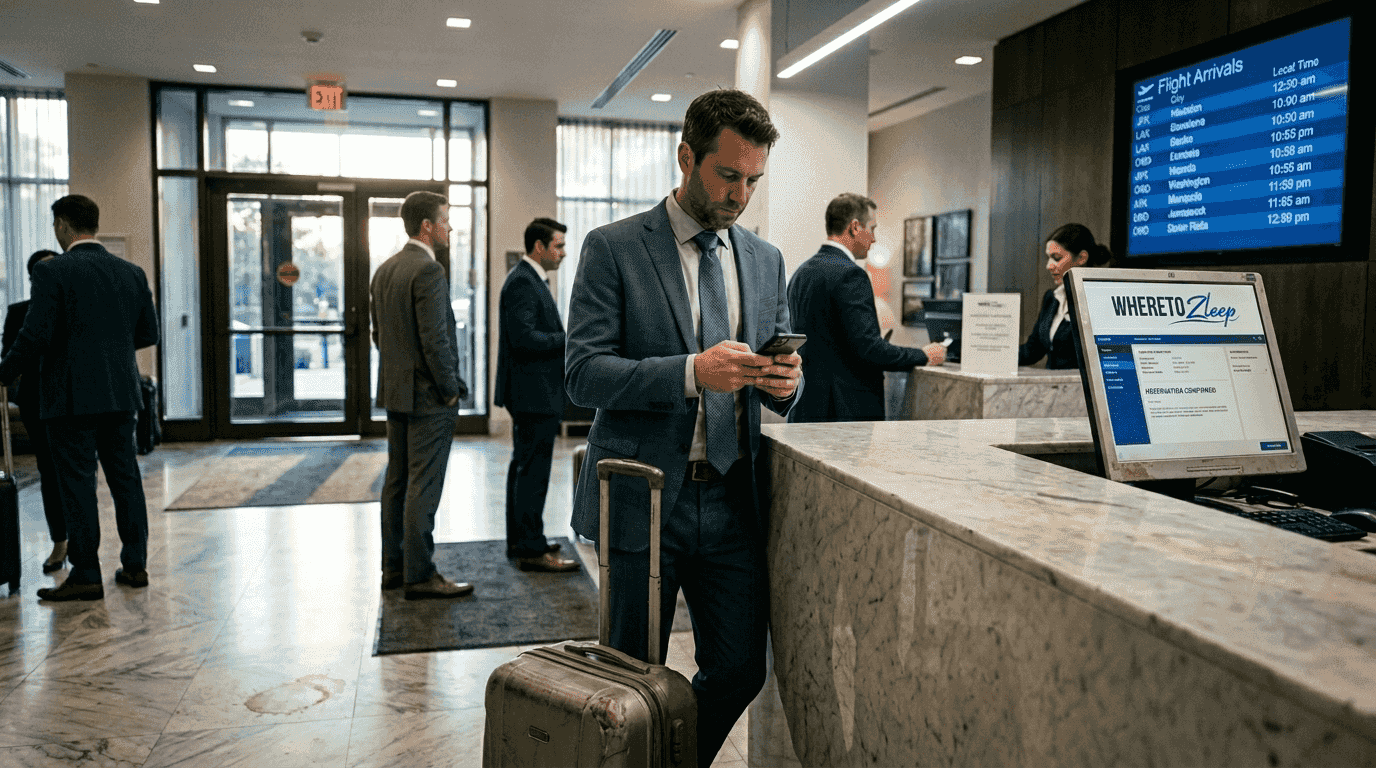
Business travel accounts for over 20% of global hotel bookings, yet many travelers still confuse business hotels with standard accommodations. The difference goes far beyond a desk in the corner. Business hotels are purpose-built facilities strategically positioned to maximize productivity and minimize friction for working professionals on the road. This guide breaks down what makes a business hotel distinct, from location and amenities to operational precision. You'll discover how to identify the right business hotel for your needs and why these specialized properties deliver measurable advantages for work-focused stays.
Table of Contents
- What Defines A Business Hotel? Understanding Its Core Characteristics
- Key Amenities And Features That Support Business Travelers' Needs
- Operations And Challenges Unique To Business Hotels
- How To Choose The Right Business Hotel For Your Needs
- Why Book Your Next Business Hotel With Wheretozleep
- Frequently Asked Questions About Business Hotels
Key takeaways
| Point | Details |
|---|---|
| Strategic location | Business hotels sit in city centers near business districts and major transportation hubs for easy access |
| Work-focused amenities | High-speed Wi-Fi, meeting rooms, and business centers are standard features that support productivity |
| Productivity design | Room layouts with ergonomic furniture and dedicated workspaces enhance efficiency during stays |
| Operational precision | Coordinated departments and trained staff deliver consistent service quality critical for business travelers |
| Peak season planning | Booking early during high-demand periods secures better rates and availability |
What defines a business hotel? Understanding its core characteristics
Hotel classification groups hotels by ownership, target market, location, and amenities. This framework helps travelers understand what to expect from different property types. Business hotels occupy a specific niche within this classification system, designed exclusively to serve corporate guests and working professionals.
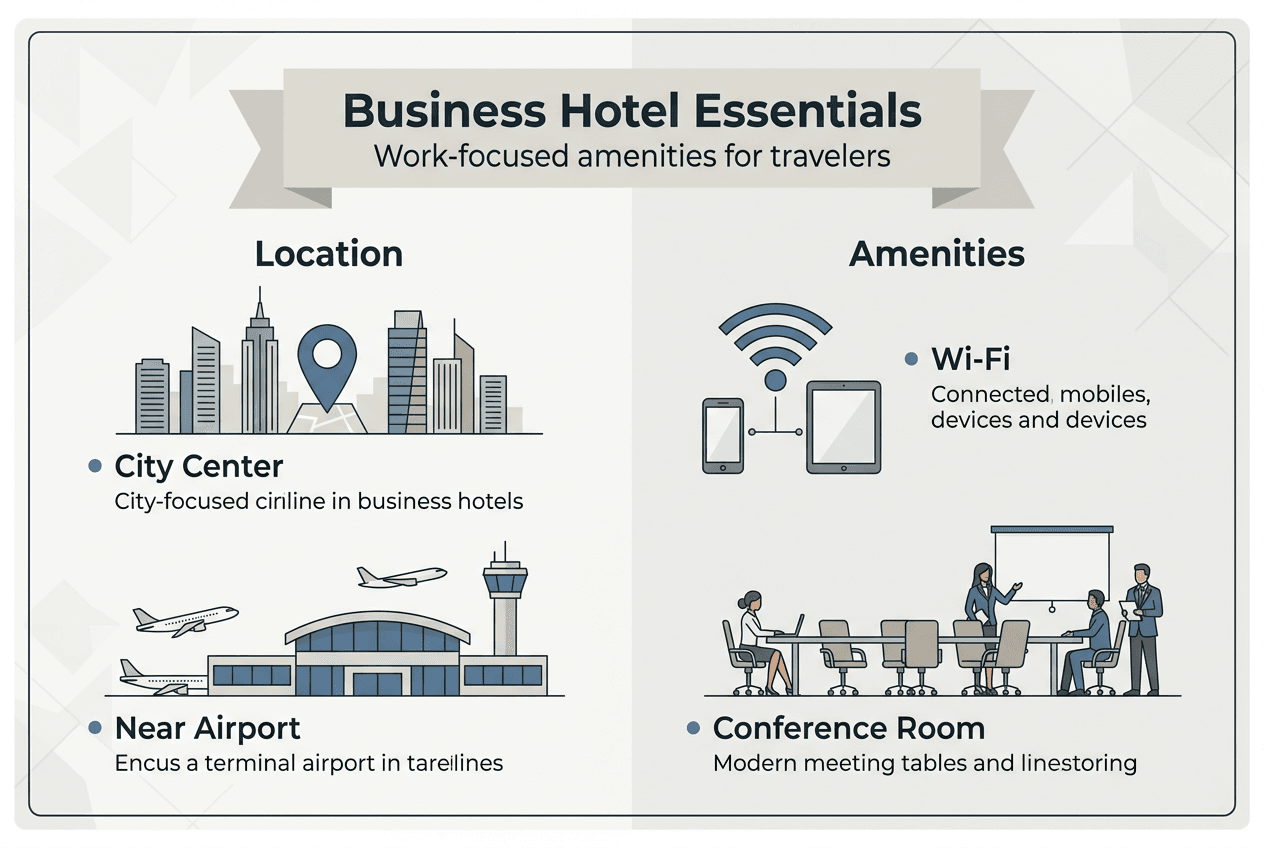
These properties are strategically located in city centers near business districts and transport hubs. Proximity to corporate offices, convention centers, and airports isn't coincidental. It's the foundational principle that separates business hotels from leisure-focused properties. When you need to attend morning meetings across town or catch an early flight, location becomes your most valuable amenity.
Business hotels share several defining characteristics that distinguish them from other accommodation types:
- Central locations within walking distance or short commutes to business districts and conference venues
- 24-hour front desk and business center access to accommodate varied work schedules and time zones
- Meeting rooms and conference facilities equipped with modern presentation technology
- High-speed internet connectivity throughout the property as a baseline expectation
- Express check-in and checkout services that minimize time spent on administrative tasks
- Concierge teams familiar with local business services, from courier companies to print shops
The target market drives every design decision. Business hotels optimize for efficiency rather than entertainment. You won't find elaborate pool complexes or kids' clubs. Instead, expect quiet corridors, soundproofed rooms, and layouts that prioritize workspace over leisure amenities. The breakfast schedule starts earlier, the coffee is stronger, and the lighting is calibrated for reading contracts rather than creating ambiance.
Service standards reflect professional expectations. Staff members understand the urgency of last-minute presentation materials or the importance of wake-up calls before crucial meetings. This operational focus creates an environment where work takes precedence without sacrificing comfort.
Key amenities and features that support business travelers' needs
The amenities package at business hotels directly addresses the friction points working travelers encounter. 85% of business travelers consider high-speed Wi-Fi crucial, while 60% require meeting rooms. These aren't luxury add-ons. They're operational necessities that determine whether you can actually work during your stay.
High-speed internet connectivity forms the foundation. Business hotels provide reliable bandwidth capable of handling video conferences, large file transfers, and simultaneous device connections. The network infrastructure supports VPN access and maintains security protocols that corporate IT departments require. When internet fails at a leisure resort, it's annoying. When it fails at a business hotel during a client presentation, it's catastrophic.
Meeting and conference facilities extend your workspace beyond the guest room. These spaces range from small boardrooms for team discussions to larger venues for presentations and training sessions. Equipment includes projectors, whiteboards, video conferencing systems, and adjustable lighting. Many properties offer technical support staff who can troubleshoot connectivity issues or adjust room configurations on short notice.
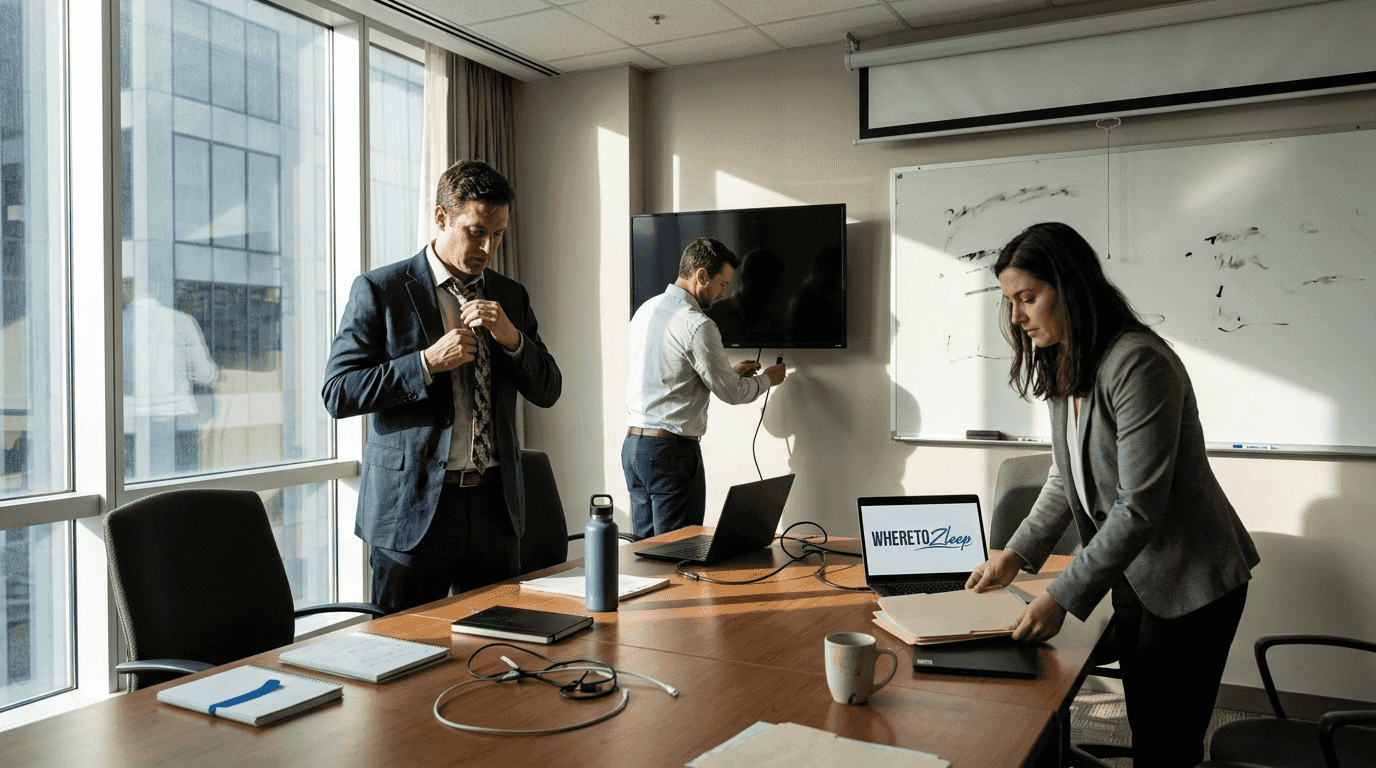
Room design prioritizes functionality alongside comfort. Well-designed hotel rooms can boost business travelers' productivity by up to 15%. This improvement comes from thoughtful details: ergonomic desk chairs that support extended work sessions, adequate electrical outlets positioned near work surfaces, task lighting that reduces eye strain, and noise insulation that blocks hallway conversations.
Essential in-room features include:
- Spacious desks with ergonomic seating and multiple power outlets
- Separate work and sleep zones to maintain focus and rest quality
- Blackout curtains for sleep flexibility across time zones
- In-room safes large enough for laptops and documents
- Coffee makers and mini-fridges for self-sufficient mornings
Business centers provide resources beyond what fits in a guest room. Access to printers, scanners, fax machines, and office supplies solves last-minute document needs. Some properties include private workstations, video conference booths, and postal services. These facilities typically operate 24 hours, recognizing that business travelers work across global time zones.
Pro Tip: Request rooms on higher floors away from elevators and ice machines. The extra distance from high-traffic areas significantly reduces ambient noise during calls and focused work sessions.
Support services distinguish exceptional business hotels from adequate ones. Express check-in bypasses lengthy front desk interactions when you're rushing to a meeting. Concierge teams arrange ground transportation, make restaurant reservations, and provide local business intelligence. Some properties offer dry cleaning with same-day turnaround, recognizing that spilled coffee before a presentation isn't just inconvenient.
The balance between work functionality and guest comfort defines the business hotel experience. Properties must deliver professional-grade work environments while maintaining the hospitality standards that make extended stays bearable. This dual mandate requires constant calibration and investment in both infrastructure and service training.
Operations and challenges unique to business hotels
Behind the polished lobby and efficient service lies complex operational machinery. Hotels require operational precision across departments to maximize guest satisfaction and profitability. Business hotels face unique coordination challenges because their guests demand consistency and responsiveness that leisure travelers might tolerate more flexibility around.
Multiple departments must synchronize seamlessly. Housekeeping needs to turn rooms quickly for early checkouts and late arrivals. Front desk staff coordinate with business centers to ensure meeting rooms are configured correctly. Maintenance teams respond immediately to technology failures that could derail presentations. Food and beverage operations adjust schedules to serve breakfast at 5:30 AM for travelers catching early flights.
This coordination becomes exponentially harder during high-occupancy periods. When a property runs at 95% capacity with multiple conferences occurring simultaneously, even small miscommunications cascade into service failures. A delayed room turnover affects check-in times. A misconfigured meeting room disrupts schedules. A slow breakfast service makes guests late for appointments.
Staffing challenges compound operational complexity. Approximately 65% of hotels faced staffing shortages as of mid-2025. Business hotels feel this pressure acutely because service quality directly impacts their value proposition. You can't deliver express check-in with skeleton crews or provide concierge expertise without experienced staff.
Key operational considerations include:
- Cross-training employees to cover multiple roles during peak periods or staff shortages
- Implementing technology solutions that automate routine tasks without sacrificing personal service
- Maintaining equipment and infrastructure to prevent failures during critical business hours
- Developing contingency protocols for common disruptions like internet outages or meeting room conflicts
Balancing personalized service with cost optimization creates constant tension. Business travelers expect recognition and customized experiences. They want staff who remember their preferences and anticipate needs. Delivering this level of service requires adequate staffing ratios and ongoing training investments that pressure profit margins.
"Operational excellence in business hotels isn't about luxury. It's about eliminating the small friction points that distract travelers from their actual work. Every minute a guest spends solving a hotel problem is a minute stolen from their professional responsibilities."
Continuous staff training maintains service consistency as team members turn over. New employees need to understand not just procedures but the underlying principles that guide business hotel service. Why does a 10-minute delay matter more at a business hotel than a beach resort? How do you prioritize competing requests during busy periods? What information do business travelers need that leisure guests don't care about?
Effective communication systems keep distributed teams aligned. When a guest mentions an important early meeting to the front desk agent, that information needs to reach housekeeping, breakfast service, and wake-up call systems. Technology helps, but human judgment determines which details matter and how to act on them.
How to choose the right business hotel for your needs
Business hotels aren't monolithic. Understanding the different types helps you match properties to specific trip requirements. Each category optimizes for different priorities, from comprehensive amenities to budget efficiency.
Full-service business hotels provide the complete package. These properties feature extensive meeting facilities, multiple dining options, fitness centers, and comprehensive business services. They're ideal for extended stays, important client meetings, or trips where you need flexibility to handle unexpected requirements. The higher price point buys convenience and options.
Limited-service business hotels strip away non-essential amenities to reduce costs. You'll find reliable Wi-Fi, adequate workspaces, and basic meeting rooms without the restaurants, room service, or elaborate facilities. These properties work well for short stays focused on specific meetings where you'll spend minimal time at the hotel.
Airport business hotels prioritize proximity to terminals and early/late flight accommodation. They typically offer shuttle services, extended front desk hours, and quick breakfast options. The tradeoff is distance from city-center business districts, making them less suitable for trips involving multiple downtown meetings.
City-center business hotels position you within walking distance of corporate offices and convention centers. Premium locations command higher rates but save time and ground transportation costs. When your schedule includes back-to-back meetings across downtown, the location premium pays for itself.
| Hotel Type | Key Amenities | Typical Location | Price Range | | --- | --- | | Full-Service | Meeting rooms, restaurants, fitness center, concierge | Downtown business districts | $200-400/night | | Limited-Service | Wi-Fi, workspace, basic meeting room | Suburban business parks | $100-180/night | | Airport | Shuttle service, 24-hour desk, quick breakfast | Near major airports | $120-220/night | | City-Center | Prime location, comprehensive business services | Central business districts | $250-500/night |
Selecting the right property requires matching hotel capabilities to your specific trip requirements. Follow this systematic approach:
- Identify your primary work activities and their location to determine ideal proximity needs
- List essential amenities based on your actual work requirements, not generic preferences
- Check reviews specifically mentioning Wi-Fi reliability and meeting room quality from recent business travelers
- Compare total costs including location-based transportation savings or expenses
- Book early during peak business travel seasons when demand spikes cause higher prices and limited availability
- Confirm cancellation policies that accommodate the schedule changes common in business travel
Location analysis extends beyond simple distance calculations. Consider traffic patterns during your meeting times. A hotel 2 miles away might take 45 minutes during rush hour while a property 4 miles away on a different route takes 15 minutes. Proximity to public transportation matters if you're visiting a city with reliable transit systems.
Pro Tip: Contact the hotel directly to ask specific questions about Wi-Fi bandwidth in guest rooms and meeting space availability during your dates. Generic website descriptions rarely provide the technical details business travelers need to evaluate connectivity adequacy.
Amenity verification prevents arrival disappointments. "Business center" might mean a single computer in the lobby or a full suite of private workstations. "Meeting room" could describe a 400-square-foot boardroom or a converted guest room with a folding table. Request photos and specifications for critical amenities before booking.
Seasonal demand affects both availability and pricing. Major cities experience business travel peaks around conference seasons, fiscal year-ends, and industry events. Booking 4-6 weeks ahead during these periods secures better rates and room selection. Last-minute bookings during peak times often mean settling for whatever remains available at premium prices.
Why book your next business hotel with WhereToZleep
Finding the right business hotel shouldn't require hours of research across multiple platforms. You need a streamlined way to compare properties based on the specific amenities and locations that matter for work-focused travel. WhereToZleep simplifies this process by aggregating business hotel options with transparent details about work-essential features.
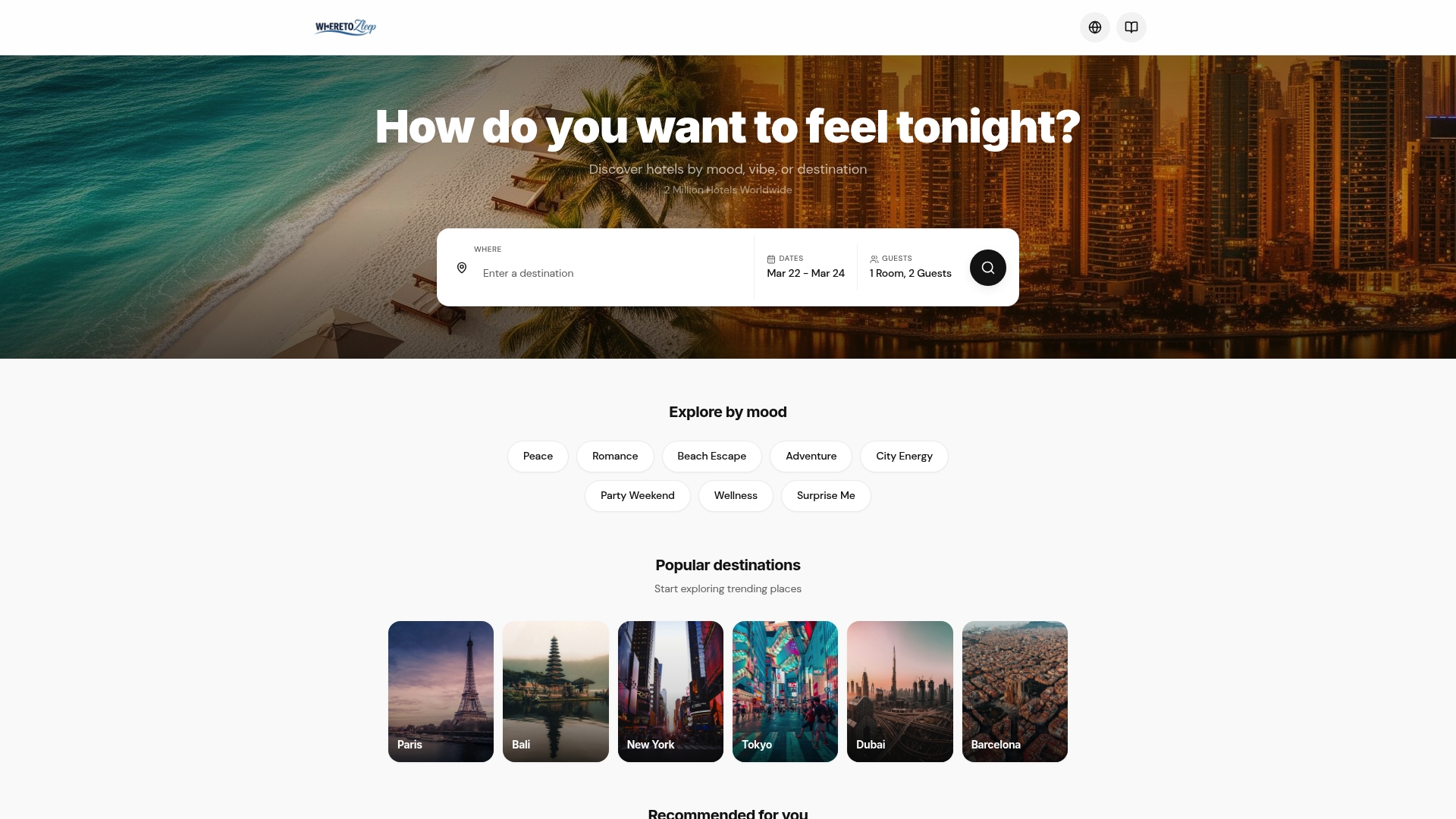
Our platform lets you filter specifically for business-critical amenities like high-speed Wi-Fi, meeting rooms, and proximity to business districts. Compare prices instantly across properties to find the best value for your budget and requirements. Detailed property information helps you verify that amenities match your actual needs before booking.
Manage your booking seamlessly through our platform. Access reservation details, modify dates when business plans change, and communicate directly with properties about specific requirements. WhereToZleep removes the friction from business travel accommodation, letting you focus on your actual work instead of logistics coordination.
Frequently asked questions about business hotels
What makes a business hotel different from a regular hotel?
Business hotels prioritize work-focused amenities and strategic locations near business districts. They provide reliable high-speed internet, meeting facilities, and services designed for productivity rather than leisure activities. Regular hotels focus more on vacation amenities like pools, entertainment, and family-friendly features.
Do business hotels cost more than standard hotels?
Pricing varies based on location and service level rather than hotel type alone. City-center business hotels command premium rates due to prime locations, while limited-service business properties often cost less than full-service leisure resorts. The value equation depends on whether amenities align with your actual needs.
Can families stay at business hotels?
Business hotels welcome all guests, though their amenities cater primarily to working travelers. Families might find limited recreational facilities and fewer child-focused services compared to leisure properties. The quiet, professional atmosphere may actually appeal to families seeking calm accommodations in city centers.
How early should I book a business hotel?
Book 4-6 weeks ahead for trips during peak business travel seasons or major city events. Last-minute bookings work for routine travel in most markets, but popular business destinations fill quickly around conferences and fiscal periods. Early booking secures better rates and room selection.
What should I ask about before booking a business hotel?
Verify Wi-Fi bandwidth capabilities in guest rooms, not just lobby areas. Confirm meeting room availability and equipment if you need presentation space. Ask about proximity to your specific meeting locations and typical commute times during business hours. Request details about workspace configurations in rooms if you'll be working extensively from the hotel.